
News
Moment When 8.8‑Magnitude Earthquake Rocks Russia’s Kamchatka Peninsula | Watch Terrifying Videos


In the early hours of July 30, 2025, the Earth roared beneath the remote volcanic wilderness of Russia’s Kamchatka Peninsula, unleashing one of the most powerful earthquakes ever recorded — magnitude 8.8. What followed was a cascading global chain of alerts, tsunami sirens blaring across oceans, and people scrambling for high ground from Vladivostok to Hawaii.
This wasn’t just another tremor. It was a seismic catastrophe with planet-wide ripples.

Where It Happened: The Kamchatka Peninsula
Kamchatka is a rugged, mountainous stretch in Russia’s Far East — part of the Ring of Fire, one of the world’s most earthquake-prone zones. The quake struck just 74 miles southeast of Petropavlovsk-Kamchatsky, the region’s capital.
- Time of impact: 4:36 AM local time
- Depth: ~19 kilometers
- Location: Offshore, near the Kuril–Kamchatka trench
The shallowness of the quake made it especially destructive, magnifying its effects across coastal and sub-oceanic zones.
Viral Footage: The Moment Buildings Shook
Footage began emerging within minutes:
- Cracked streets, collapsing facades, and flooded coastal roads in Kamchatka
- A kindergarten wall was filmed buckling and collapsing mid-quake in Petropavlovsk
- Fishermen ran for shelter as boats slammed against piers
- A chilling video from Hawaii shows a resident recording tsunami sirens: “I haven’t heard this in 11 years,” she says, voice shaking
These real-time visuals offered a glimpse of raw panic and swift disaster management.

Tsunami Alerts Around the Pacific
Following the quake, the Pacific Tsunami Warning Center (PTWC) immediately issued advisories to dozens of nations.
Alerted Zones Included:
- Russia’s Kuril Islands and Sakhalin
- Japan (particularly Hokkaido and northern Honshu)
- South Korea, Taiwan, and Philippines
- Alaska, Hawaii, and the U.S. West Coast
- Pacific South America — Mexico, Ecuador, Peru, Chile
🇯🇵 Japan: Mass Evacuations
Japan acted swiftly. Over 900,000 residents in 133 municipalities were urged to evacuate.
Wave heights ranged from 30 cm (1 ft) to 1 meter, with minor flooding along Nemuro and Kushiro ports.
Bullet train services in northern Japan were suspended as a precaution, and nuclear facilities were inspected.

🇺🇸 U.S. West Coast and Hawaii: Sirens, Warnings, and Panic
In Hawaii, tsunami sirens woke residents at 2 AM. A viral clip captured a Maui woman saying: I’ve never heard this alarm in my 11 years here. Everyone’s moving uphill.
Although no major waves hit the islands, 1.5–1.8 meter surges were expected.
In California, Oregon, Washington, and Alaska, coastal towns were placed on alert. Beaches were closed, and emergency shelters were activated in Los Angeles, San Diego, and Anchorage.
Impact in Kamchatka: What We Know So Far
The full extent of damage is still being assessed, but early reports include:
- At least 3 schools and one hospital damaged
- Multiple landslides in remote mountain zones
- Power and telecom outages in rural districts
- Tsunami waves up to 4 meters hit Severo-Kurilsk, damaging fishing infrastructure
Thankfully, no mass casualties have been reported as of now, due to the region’s sparse population and rapid evacuation.

Why Was It So Strong?
Kamchatka sits atop a megathrust fault — a subduction zone where the Pacific Plate slides beneath the Okhotsk Plate. Such zones are prone to gigantic earthquakes, like:
- 1964 Alaska Earthquake (M 9.2)
- 2004 Indian Ocean Tsunami (M 9.1)
- 2011 Tohoku Japan Quake (M 9.0)
The 2025 Kamchatka quake now joins this elite — and terrifying — list of geological giants.
Historic Parallels
Kamchatka has seen quakes before, but none this intense since:
- 1952 Severo-Kurilsk Earthquake – Estimated M ~ 9.0, 2300+ fatalities
- 1737 Kamchatka Earthquake – One of the largest quakes in history, likely M 9.0–9.3
Seismologists had warned of a recurrence. The Kuril–Kamchatka Trench had been quiet for over a decade — building tension that now exploded beneath the sea.
What Happens Next?
Aftershocks:
Over 30 tremors above M 5.0 were recorded within 12 hours, including a 7.1 magnitude aftershock. Officials warn that aftershocks could continue for weeks.
Recovery:
- Russia’s EMERCOM dispatched rescue units from Vladivostok and Magadan
- Engineers are inspecting bridges, dams, and power stations
- Relief is being flown into Kamchatka, despite poor weather conditions
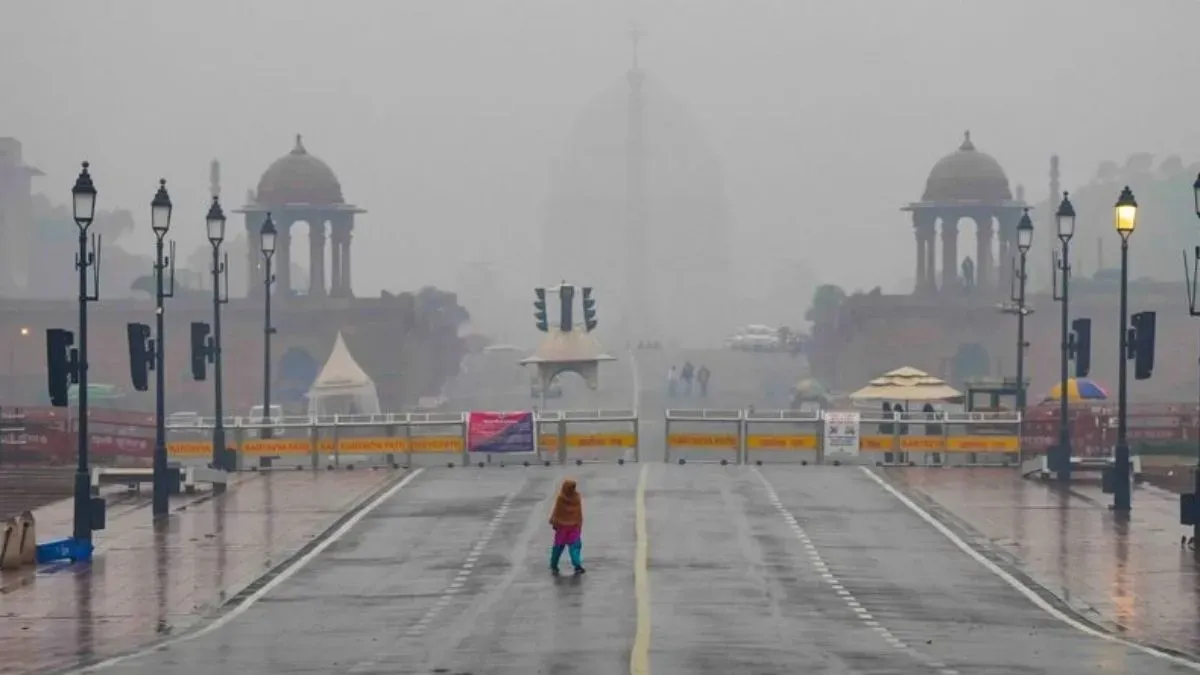
Cold conditions have returned to the national capital after rainfall lashed parts of Delhi-NCR on Friday, January 23, bringing a noticeable dip in temperatures and relief from pollution. The mercury slipped below 10°C, marking a sharp turnaround after a brief spell of warmer days earlier this week.
According to the India Meteorological Department (IMD), Delhi is likely to witness a further drop in temperatures over the next two days, with light rain predicted for today as well. The maximum temperature is expected to hover around 20°C, while the minimum may dip to 6°C, intensifying the winter chill.
Rain Brings Clear Skies and Better Air Quality
Friday’s rainfall significantly altered weather conditions across the region. Cool northerly winds swept through the capital, leading to clearer skies and a marked improvement in visibility. Air quality levels also improved, with several monitoring stations recording a drop in pollution indices due to the washout effect of rain.
Meteorologists noted that the rain activity was concentrated mainly in the morning and early afternoon, gradually subsiding by evening.
Delhi Records Wettest January Day in Two Years
Delhi witnessed its first rain of 2026, which also turned out to be the wettest January day in the last two years. IMD data shows that the highest January rainfall on record was logged on January 30, 2023, when the city received 20.4 mm of rain.
On Friday, rainfall between 8:30 am and 5:30 pm was widespread across Delhi-NCR:
- Ridge: 17.4 mm
- Palam: 14.0 mm
- Lodi Road: 13.4 mm
- Safdarjung: 13.2 mm
- Ayanagar: 11.5 mm
Most weather stations reported light to moderate rainfall between 8:30 am and 2:30 pm, after which precipitation weakened significantly.
Weather Update for Other North Indian Cities
- Lucknow (Uttar Pradesh): Light rain is likely in the morning, with a minimum temperature around 10°C.
- Patna (Bihar): Clear skies are expected, with the minimum temperature settling near 13°C.
- Jaipur (Rajasthan): The minimum temperature may drop to around 5°C, with partly cloudy conditions likely.
What to Expect Next
IMD officials have indicated that the temperature dip could lead to cold day conditions in isolated pockets of Delhi-NCR. Early morning shallow fog may also develop over the next few days, especially in low-lying areas. Residents have been advised to take precautions against cold weather, particularly during early morning and late-night hours.
While no severe cold wave warning has been issued yet, authorities are monitoring conditions closely as winter tightens its grip once again on north India.
News
PM Modi hails Mahayuti’s sweeping win in Maharashtra civic polls, calls it people’s mandate for NDA governance

Prime Minister Narendra Modi on Friday welcomed the Mahayuti alliance’s decisive victory in the Maharashtra municipal corporation elections, describing it as a clear indication of the deepening bond between the people of the state and the National Democratic Alliance (NDA). The results, covering elections to 29 municipal corporations, have delivered a strong endorsement of the alliance’s governance model and development agenda.
Taking to social media platform X, PM Modi thanked the people of Maharashtra for backing what he termed the NDA’s “pro-people and good governance” agenda. He said the mandate reflected public trust in the alliance’s track record and its vision for the future.
“Thank you Maharashtra! The dynamic people of the state bless the NDA’s agenda of pro-people good governance. This is a vote to add momentum to progress and celebrate the glorious culture the state is associated with,” the prime minister wrote.
Praise for NDA workers and campaign strategy
In a separate post, PM Modi lauded the efforts of NDA karyakartas, crediting them for working tirelessly at the grassroots level and effectively communicating the alliance’s message to voters. He noted that party workers played a crucial role in highlighting development initiatives while countering what he described as misinformation spread by opposition parties.
“They talked about our alliance’s track record, highlighted our vision for the coming times and also effectively countered the lies of the Opposition. My best wishes to them,” he said.
Mahayuti’s dominant performance across civic bodies
The Mahayuti alliance registered a commanding performance in the civic polls, with the Bharatiya Janata Party (BJP) emerging as the single-largest party. The BJP won over 1,300 of the 2,869 seats contested across municipal corporations, reinforcing its organisational strength in urban Maharashtra.
Chief Minister Eknath Shinde-led Shiv Sena finished second within the alliance, securing 394 seats. The Congress surprised many observers by finishing third overall with victories in 315 seats, indicating pockets of resilience despite recent electoral setbacks.
Uddhav Thackeray-led Shiv Sena (UBT) won 149 seats, while the Nationalist Congress Party (NCP), which contested independently on several seats, secured 158 victories. Asaduddin Owaisi’s AIMIM also made notable gains with over 90 seats, while Sharad Pawar’s NCP (SP) won 36 seats. Raj Thackeray’s Maharashtra Navnirman Sena (MNS) managed to secure around 12 seats.
Political significance ahead of key elections
Although the final tally is yet to be officially declared by the Maharashtra State Election Commission, political analysts see the results as a significant morale booster for the Mahayuti government led by Devendra Fadnavis, with Eknath Shinde and Ajit Pawar as deputy chief ministers. The outcome is being viewed as an important indicator of voter sentiment ahead of future state and national-level contests.
The civic poll victory is also expected to strengthen the NDA’s narrative of political stability, development-focused governance, and organisational unity in Maharashtra’s complex political landscape.

Several Indian airlines, including Air India, IndiGo, and SpiceJet, on Thursday issued travel advisories after Iran abruptly closed its airspace, disrupting multiple international flight routes. The sudden shutdown has led to delays, rerouting, and cancellations, particularly for long-haul flights that typically pass over Iranian territory.
The development comes amid intensifying protests in Iran against Supreme Leader Ayatollah Ali Khamenei and escalating tensions between Iran and the United States, raising serious aviation safety concerns in the region.
Air India warns of delays and cancellations
Air India was among the first carriers to alert passengers. In a post on X, the airline said flights that usually overfly Iran are now being rerouted to ensure passenger safety, which may result in longer flight times.
“Due to the emerging situation in Iran and the subsequent closure of its airspace, Air India flights are operating via alternative routes, which may lead to delays. Some flights where rerouting is not feasible are being cancelled,” the airline said.
Air India urged passengers to check flight status before heading to the airport, reiterating that the safety of passengers and crew remains its top priority.
IndiGo issues travel alert, offers rebooking and refunds
IndiGo also confirmed that several of its international services were impacted due to Iran’s “sudden airspace closure.”
“Our teams are working diligently to assess the situation and support affected customers by offering the best possible alternatives,” the airline said.
IndiGo added that impacted passengers would be provided options such as rebooking on alternate flights or refunds, depending on individual cases.
SpiceJet advises passengers to stay updated
SpiceJet released a similar advisory, informing travellers that some of its flights could be affected due to the closure.
“Passengers are advised to check their flight status on our website or contact our 24×7 reservation helpline for assistance,” the airline said in a statement on X.
Why Iran closed its airspace
Iran ordered the closure of its airspace to commercial aircraft early Thursday, according to a notice issued to pilots. While no official reason was provided, the restriction was initially expected to remain in effect until 7:30 am local time.
The move coincides with widespread domestic protests, heightened security measures, and growing fears of a possible US military response. Iran has previously shut its airspace during periods of conflict, including:
- The 12-day confrontation with Israel in June
- Exchanges of fire during the Israel–Hamas conflict
Airlines globally avoiding Iranian airspace
Aviation risk-monitoring platform SafeAirspace reported that most international airlines are now avoiding Iranian airspace altogether. Several carriers have already reduced or suspended services in the region.
Experts warn that airspace closures often signal potential military or security activity, including air defence operations or missile launches, which raise the risk of civilian aircraft being misidentified.
What passengers should do
- Check flight status directly with airlines before travel
- Expect longer travel times due to rerouting
- Be prepared for last-minute schedule changes or cancellations
- Opt for flexible rebooking or refunds if offered
As the situation in Iran remains volatile, airlines are expected to continue monitoring developments closely and adjust operations in line with safety advisories from international aviation authorities.


Healthy pav bhaji recipe: A lighter take on the classic street-food favourite

Apple releases security update for iPhone 6s, iPhone 7 and other older devices: Full list

‘Badshah is being judged…’: Santy Sharma defends rapper amid Tateeree song controversy

Ex-Cricketer Shikhar Dhawan Buys Ultra-Luxury Apartment Worth ₹69 Crore in Gurugram

Delhi Police SI Neetu Bisht Caught Taking ₹20 Lakh Bribe – Shocking Details Emerge in Corruption Probe

Telegram Channels Disseminating Pro‑Russian Propaganda in Poland
-
 Celebrity Lifestyle10 months ago
Ex-Cricketer Shikhar Dhawan Buys Ultra-Luxury Apartment Worth ₹69 Crore in Gurugram
-
 Crime & Investigation8 months ago
Delhi Police SI Neetu Bisht Caught Taking ₹20 Lakh Bribe – Shocking Details Emerge in Corruption Probe
-
 Glamour & Entertainment9 months ago
Telegram Channels Disseminating Pro‑Russian Propaganda in Poland
-

 Bollywood7 months ago
No ₹3 Lakh Fine or 2-Year Jail: The Truth Behind the ‘Hakla’ GIF Buzz
-

 Entertainment9 months ago
Abhijeet & Dr Tarika Reunite in CID 2 — Fans Say ‘Clear the Misunderstanding Now
-

 Business9 months ago
Amazon sets 30‑day relocation deadline for corporate staff—opt out by resigning in 60 days
-
 Travel & Adventure9 months ago
Best Places to Hangout in Delhi (2025): Top 10 Picks for Fun & Chill
-

 Economy & Business9 months ago
📈 Indian Stock Market Soars in June 2025 Amid RBI Rate Cut and Foreign Investment Boost