
Politics
Verified & Expanded News Summary


🔹 Big Proposal: Lok Sabha seats may increase to 850
The Central Government is preparing to introduce a Constitution Amendment Bill (likely the 131st Amendment) to increase the strength of the Lok Sabha from 543 seats to about 850 seats.
- 815 seats → for States
- 35 seats → for Union Territories
This requires changes to Article 81 of the Constitution.
🔹 Why is the government doing this?
The main goal is to implement 33% reservation for women in Parliament and state assemblies (Women’s Reservation Law, 2023).
- With 850 seats, around 270+ seats could be reserved for women
- It aims to ensure women’s participation without reducing existing seats for men
👉 In simple terms:
Instead of taking seats away from current MPs, the government wants to increase total seats and then apply reservation.
🔹 Delimitation (important part)
The proposal is linked to delimitation (redrawing constituencies):
- Based on 2011 Census data (latest available)
- May allow delimitation before the next census, instead of waiting until after 2026
This is a major shift because delimitation has been frozen for decades.
🔹 Timeline
- Bill to be introduced in special Parliament session (April 16–18, 2026)
- Women’s reservation likely to be implemented by 2029 general elections
🔹 Other bills coming together
The government is expected to introduce three linked laws:
- Constitution Amendment Bill (increase seats)
- Delimitation Bill
- Laws for Union Territories (Delhi, J&K, Puducherry)
🔹 Political reactions & concerns
The proposal is controversial:
- Some leaders (especially from southern states) fear:
- States with higher population growth (like UP, Bihar) may gain more seats
- Southern states may lose relative influence
- Debate is ongoing about:
- Fair representation vs population-based seats
- Federal balance in India
⚖️ What this means (simple explanation)
If passed:
✔ Parliament becomes much larger
✔ More MPs → smaller constituencies → possibly better representation
✔ Women get guaranteed 33% seats
❗ But could shift political power between states
✅ Final Verdict on Your Article
Your article is credible and mostly correct, including:
- Seat increase to 850 ✔
- 815 (states) + 35 (UTs) ✔
- Link to women’s reservation ✔
- Use of 2011 Census ✔








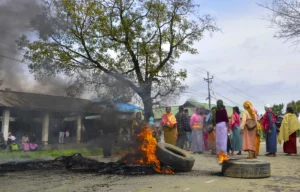

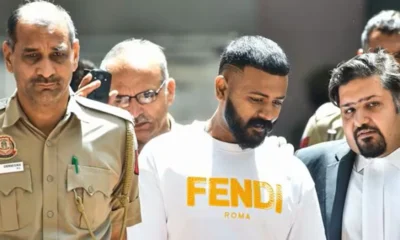

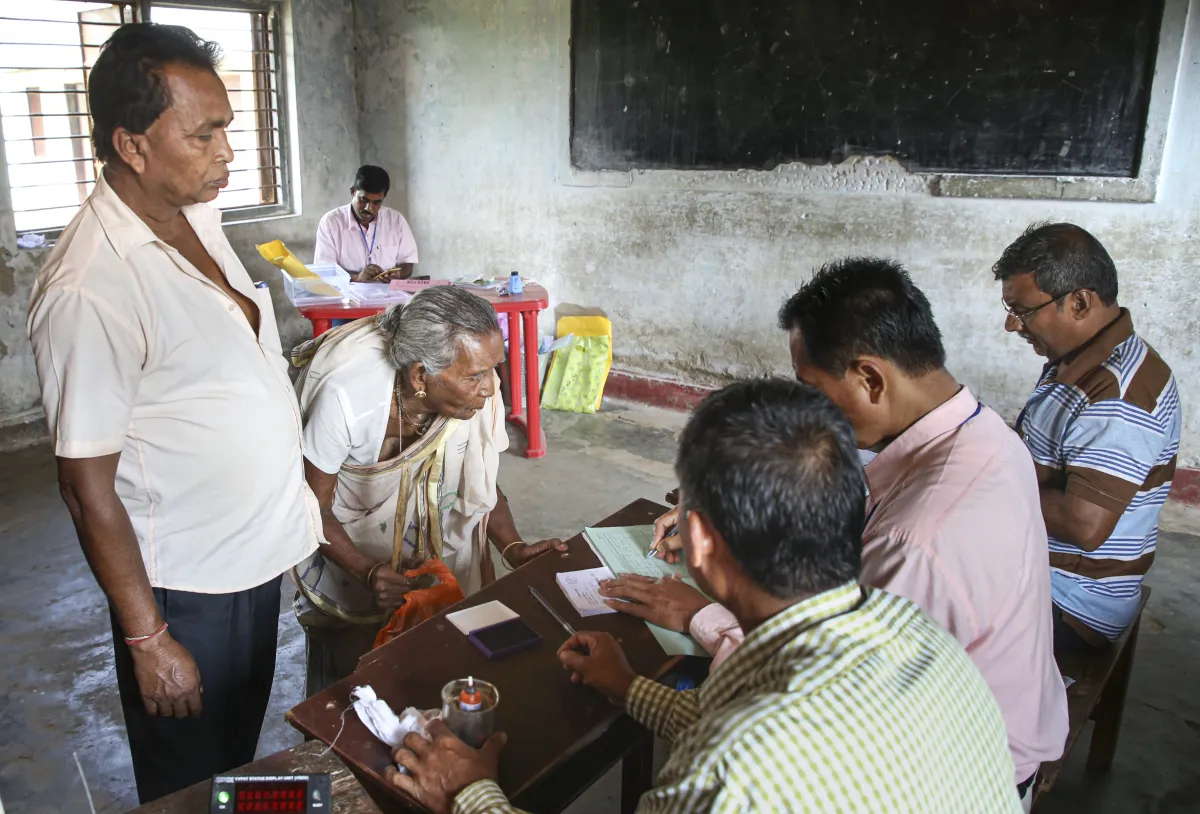
Tensions in the Garo Hills region of Meghalaya escalated sharply in early 2026 over the upcoming elections to the Garo Hills Autonomous District Council, leading to violence, curfews, and eventually the postponement of polls.
📌 What Triggered the Unrest?
The immediate trigger was a controversial notification issued by the GHADC’s Executive Committee. It proposed making Scheduled Tribe (ST) certificates mandatory for candidates contesting the council elections.
- This move aimed to bar non-tribal candidates from participating.
- However, for decades, non-tribals had been allowed to contest these elections.
The situation escalated after the Meghalaya High Court struck down this notification, stating that:
- The Executive Committee did not have the authority to enforce such a rule independently.
- Proper legislative procedure—approval by the council and the Governor—was not followed.
This decision angered sections of the Garo community who supported restricting participation to tribal candidates.
⚠️ Violence and Law-and-Order Breakdown
Following the court’s ruling:
- Clashes broke out between tribal and non-tribal groups, particularly in Chibinang, West Garo Hills.
- Two people were killed in police firing during violent protests.
- Incidents of arson, assaults, and mob gatherings were reported across towns like Tura.
Authorities responded with strict measures:
- Curfew was imposed in multiple districts.
- Mobile internet services were suspended across five districts in Garo Hills.
- Security forces were deployed to control unrest.
🗳️ Election Postponement
In response to the deteriorating situation, Chief Minister Conrad K Sangma announced the postponement of the April 10 GHADC elections, citing:
- Safety concerns
- Public inconvenience
- Ongoing tensions
🧭 What Are Locals Demanding?
Several local groups, including student unions and civil society organizations, have put forward key demands:
1. Restrict Elections to Scheduled Tribes
- Only ST candidates should be allowed to contest GHADC elections.
- Some groups also want only ST voters to participate.
2. Protect Indigenous Identity
- Concerns that non-tribal participation could dilute Garo culture, traditions, and political autonomy.
3. Safeguard Land Rights
- Fear that increased non-tribal influence could impact customary land ownership systems, which are central to tribal identity.
4. Strengthen GHADC Powers
- Calls to empower the council to better protect tribal interests and enforce local laws.
🧩 Broader Context
The GHADC is part of India’s Sixth Schedule framework, which grants autonomy to tribal regions in the Northeast. These councils are meant to:
- Preserve indigenous customs
- Manage land and resources
- Provide local governance
The current conflict highlights a deeper tension between:
- Legal/constitutional procedures, and
- Ethnic identity and indigenous rights
🧠 Key Takeaway
The unrest in Garo Hills is not just about an election rule—it reflects a larger struggle over identity, autonomy, and political control in tribal regions. Balancing constitutional law with local aspirations remains the core challenge.
News
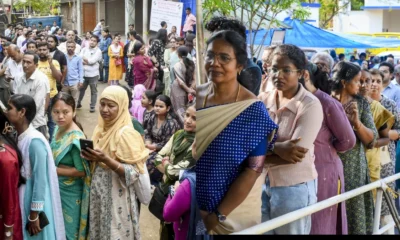
Assembly Elections 2026: Polling concludes in Assam, Kerala and Puducherry; strong voter turnout recorded
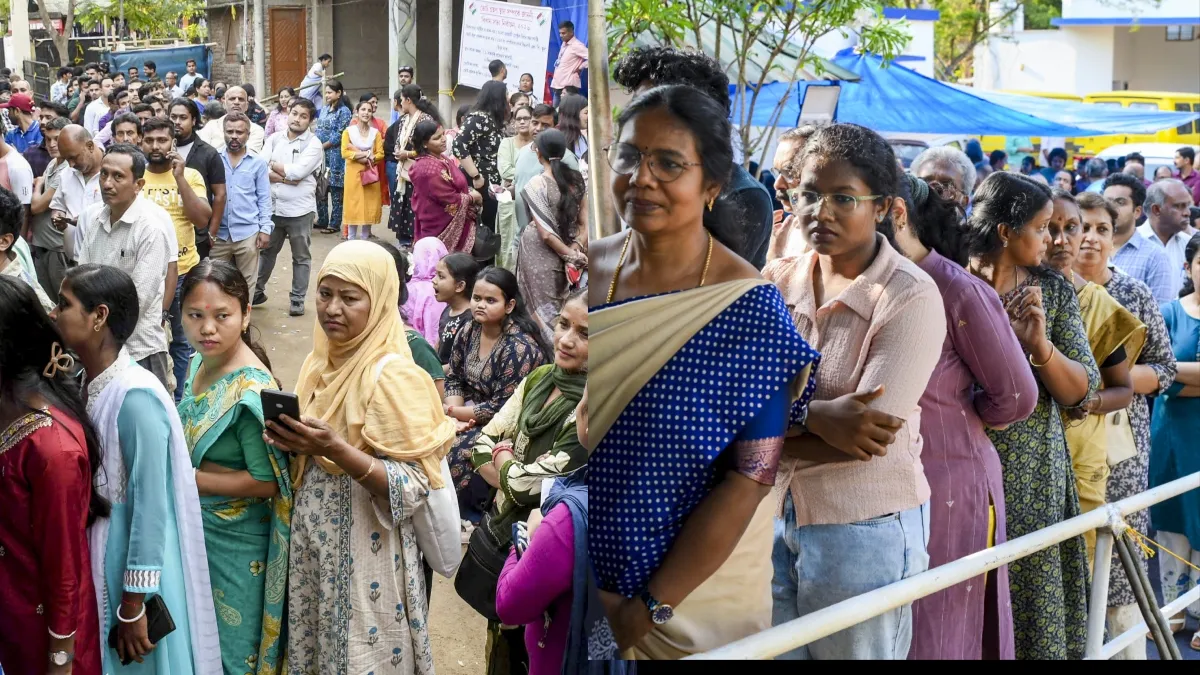
Polling for the 2026 Assembly elections in Assam, Kerala, and Puducherry concluded on Thursday, witnessing high voter participation across all three regions. Voting began early in the morning and was conducted under tight security arrangements supervised by the Election Commission of India to ensure smooth and fair polling.
Voters turned out in large numbers to decide the fate of hundreds of candidates, reflecting strong public engagement in these crucial elections.
🧑💼 Key leaders cast their votes
Prominent political leaders were among the early voters:
- Himanta Biswa Sarma
- Pinarayi Vijayan
- N. Rangaswamy
Notably, Rangaswamy continued his tradition of riding a motorcycle to the polling booth, drawing public attention.
📊 Seats and electoral stakes
- Assam: 126 Assembly seats
- Kerala: 140 Assembly seats
- Puducherry: 30 Assembly seats
The elections saw intense contests between major alliances, with regional dynamics playing a key role in each state.
📈 Voter turnout highlights
Assam: Over 84% turnout
Assam recorded an impressive around 84.8% voter turnout, higher than the 82.04% in 2021.
- Highest turnout: Dalgaon (95.83%)
- Lowest turnout: Amri (74.41%)
- Total candidates: 722
- Polling stations: 31,490 across 35 districts
The main contest is between the BJP-led NDA and the Congress-led opposition alliance. The ruling alliance is aiming for a third consecutive term.
Kerala: Around 78% turnout
Kerala registered approximately 78.25% voter turnout, slightly higher than the 74.06% in 2021.
The key battle is among:
- LDF (Left Democratic Front) – seeking a rare third straight term
- UDF (United Democratic Front) – aiming for a comeback
- BJP – attempting to expand its presence
The election is widely seen as a referendum on the governance of CM Pinarayi Vijayan.
Puducherry: Nearly 90% turnout
Puducherry witnessed a very high turnout of around 89–90%, indicating strong voter enthusiasm.
The contest is primarily between:
- NDA (led by AINRC and BJP) – trying to retain power
- Congress-led alliance – focusing on governance and autonomy issues
🔍 What’s next?
- Counting of votes: Scheduled for May 4, 2026
- Results will determine:
- Whether incumbents retain power
- Or opposition alliances stage comebacks
🧠 Key takeaways
- All three regions recorded higher turnout than previous elections
- Strong participation suggests high political awareness and competitive races
- Outcomes could significantly influence regional and national political dynamics
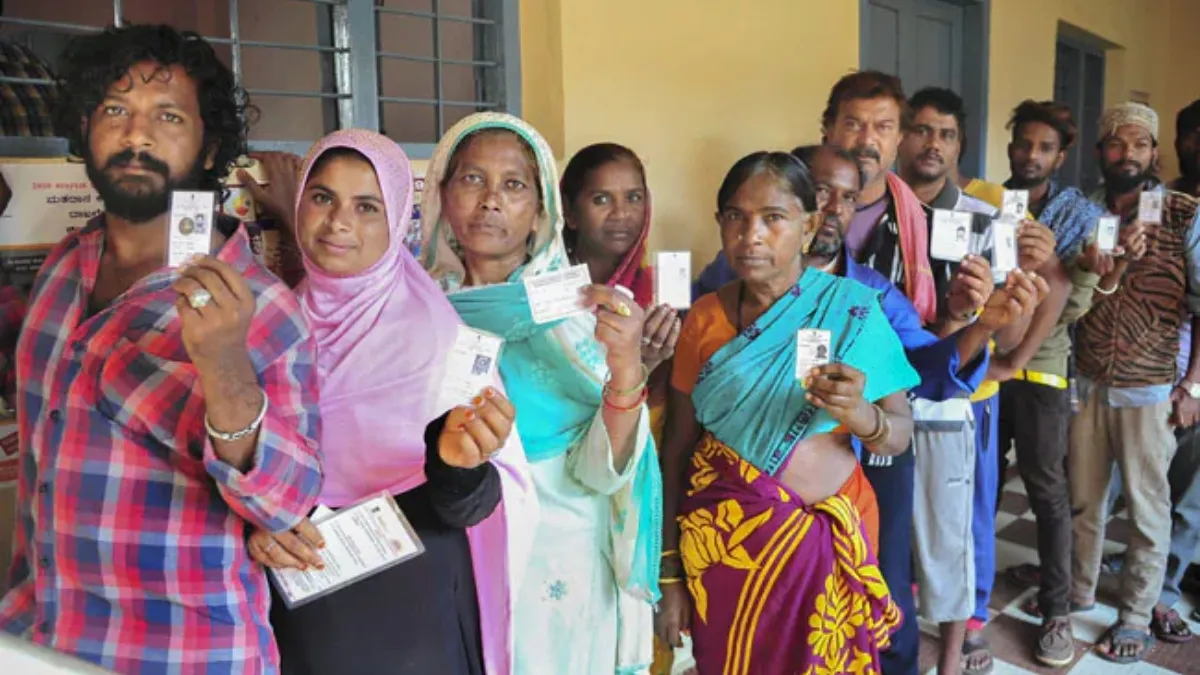
India is gearing up for crucial Assembly elections in three politically significant regions — Assam, Kerala, and the Union Territory of Puducherry — with polling preparations entering the final stage. The elections are expected to shape regional political dynamics and influence national narratives ahead of future general elections.
The Election Commission of India has made extensive arrangements to ensure free, fair, and peaceful voting, including deployment of security forces, large-scale logistics, and real-time monitoring mechanisms.
📅 Key Dates
- Polling: Begins at 7 AM (date as scheduled by ECI)
- Counting of votes: May 4, 2026
- Seats at stake:
- Assam – 126
- Kerala – 140
- Puducherry – 30
🌴 Kerala Assembly Elections 2026
Kerala is witnessing a high-voltage contest primarily between:
- Left Democratic Front (LDF)
- United Democratic Front (UDF)
- National Democratic Alliance (NDA)
🔢 Key Numbers
- Total voters: 2.69 crore+
- Candidates: 883
- Polling stations: 30,471
- Polling personnel: ~1.46 lakh
👥 Voter Demographics
- Women voters outnumber men slightly
- Over 4.2 lakh first-time voters
- More than 2 lakh elderly voters (85+)
⚔️ Political Stakes
The LDF, led by Communist Party of India (Marxist), is aiming for a historic third consecutive term, something rare in Kerala’s political history, which traditionally alternates power between LDF and UDF.
The UDF, led by the Indian National Congress, is trying to capitalize on anti-incumbency, while the BJP-led NDA seeks to expand its footprint in a state where it has struggled historically.
🌄 Assam Assembly Elections 2026
Assam is set for a fierce contest between:
- BJP-led National Democratic Alliance
- Congress-led opposition alliance
🔢 Key Numbers
- Total voters: 2.5 crore+
- Candidates: 722
- Polling stations: 31,490
- Polling personnel: 1.51 lakh+
🧑🤝🧑 Voter Highlights
- Over 6.4 lakh first-time voters
- 2 lakh+ senior citizens (80+)
- 2 lakh+ persons with disabilities
⚙️ Tech & Security
- 100% webcasting across polling stations
- Heavy deployment of central forces
- Use of EVMs and VVPATs at scale
⚔️ Political Stakes
The BJP-led NDA is aiming for a third consecutive term, banking on development initiatives and leadership under Himanta Biswa Sarma.
Meanwhile, the Congress has stitched together a broad opposition alliance, making Assam one of the most closely watched electoral battlegrounds.
🌊 Puducherry Assembly Elections 2026
In the Union Territory of Puducherry, the contest is shaping into a multi-cornered battle.
🔢 Key Numbers
- Total voters: 10.14 lakh
- Polling stations: 1,099
🧑🤝🧑 Voter Highlights
- Women voters form a majority
- 24,000+ first-time voters
- 6,000+ elderly voters (85+)
⚔️ Political Stakes
Key players include:
- NDA alliance (including Bharatiya Janata Party and regional partners)
- Congress-DMK alliance (with Dravida Munnetra Kazhagam)
A notable new entrant is actor Vijay’s party, Tamilaga Vettri Kazhagam (TVK), which could make the contest triangular and unpredictable.
🔍 What Makes These Elections Important?
1. Regional vs National Influence
These elections will test the strength of national parties like the BJP and Congress against strong regional alliances.
2. Momentum for Future Elections
Results could influence political strategies ahead of the next Lok Sabha elections.
3. Emerging Political Forces
New players like TVK in Puducherry could disrupt traditional vote banks.
4. Voter Trends
High numbers of first-time voters and women voters may significantly impact outcomes.
📊 Final Take
The 2026 Assembly elections in Assam, Kerala, and Puducherry are more than routine state polls — they are strategic political battles with implications beyond regional boundaries. With tight contests, evolving alliances, and new entrants, the results on May 4, 2026, will be closely watched across the country.


Akshay Kumar Reveals Son Was Scared of Vidya Balan After Bhool Bhulaiyaa

Brahmastra Part Two: Dev Update: Is Namit Malhotra Reviving Astraverse?

RCB vs LSG Pitch Report: What to Expect at M. Chinnaswamy Stadium in IPL 2026

Ex-Cricketer Shikhar Dhawan Buys Ultra-Luxury Apartment Worth ₹69 Crore in Gurugram

Delhi Police SI Neetu Bisht Caught Taking ₹20 Lakh Bribe – Shocking Details Emerge in Corruption Probe

Telegram Channels Disseminating Pro‑Russian Propaganda in Poland
-
 Celebrity Lifestyle11 months ago
Ex-Cricketer Shikhar Dhawan Buys Ultra-Luxury Apartment Worth ₹69 Crore in Gurugram
-
 Crime & Investigation9 months ago
Delhi Police SI Neetu Bisht Caught Taking ₹20 Lakh Bribe – Shocking Details Emerge in Corruption Probe
-
 Glamour & Entertainment10 months ago
Telegram Channels Disseminating Pro‑Russian Propaganda in Poland
-

 Bollywood8 months ago
No ₹3 Lakh Fine or 2-Year Jail: The Truth Behind the ‘Hakla’ GIF Buzz
-

 Entertainment10 months ago
Abhijeet & Dr Tarika Reunite in CID 2 — Fans Say ‘Clear the Misunderstanding Now
-
 Travel & Adventure10 months ago
Best Places to Hangout in Delhi (2025): Top 10 Picks for Fun & Chill
-

 Business10 months ago
Amazon sets 30‑day relocation deadline for corporate staff—opt out by resigning in 60 days
-

 Economy & Business10 months ago
📈 Indian Stock Market Soars in June 2025 Amid RBI Rate Cut and Foreign Investment Boost