
State & Regional
Why Israeli PM Benjamin Netanyahu Called PM Modi: Key Points From Their Discussion


Prime Minister Narendra Modi and Israeli Prime Minister Benjamin Netanyahu spoke over the phone on January 7, exchanging New Year greetings and wishing peace, prosperity, and well-being for the people of both countries. According to an official statement from the Prime Minister’s Office (PMO), the conversation focused on strengthening the India–Israel strategic partnership, which is anchored in shared democratic values, mutual trust, and long-term cooperation.
The two leaders also discussed regional and global developments, reaffirming their commitment to remain in close contact in the coming months.
Zero-Tolerance Stand Against Terrorism
A key highlight of the conversation was the leaders’ strong and unequivocal condemnation of terrorism. Both Prime Ministers reiterated their zero-tolerance approach towards terrorism in all its forms and manifestations.
“The two leaders strongly condemned terrorism and reaffirmed their uncompromising stance against terrorism,” the PMO said, adding that they emphasised the importance of sustained cooperation to combat global terrorism.
The leaders also expressed satisfaction with the positive momentum in India–Israel relations, particularly in security and counter-terrorism cooperation.
Discussion on the Gaza Peace Plan
During the call, Prime Minister Netanyahu briefed PM Modi on the implementation of the Gaza Peace Plan. PM Modi, in turn, reaffirmed India’s long-standing position in support of efforts aimed at achieving a just, durable, and peaceful resolution in the region.
Both leaders exchanged views on the evolving situation in West Asia and underlined the need for dialogue, stability, and humanitarian considerations in addressing regional challenges.
Broader Regional and Global Issues
In addition to West Asia, the two Prime Ministers discussed broader regional and global matters of shared interest. They agreed to maintain regular communication and coordination on international issues, reflecting the growing convergence between New Delhi and Jerusalem on geopolitical and security concerns.
Context: Sustained High-Level Diplomatic Engagement
The phone call is part of ongoing high-level diplomatic engagement between India and Israel. On December 10, 2025, PM Modi and PM Netanyahu had spoken to review developments in West Asia and reaffirm their joint commitment to counter terrorism.
In December 2025, External Affairs Minister S. Jaishankar undertook a two-day visit to Israel as part of India’s diplomatic outreach. During the visit, Jaishankar met Prime Minister Netanyahu in Jerusalem, conveying PM Modi’s greetings and discussing cooperation across key sectors including technology, economy, skills development, connectivity, innovation, and security.
Jaishankar also held meetings with Israeli President Isaac Herzog, Foreign Minister Gideon Sa’ar, and Minister of Economy and Industry Nir Barkat. These discussions focused on reviewing progress in bilateral ties and identifying new avenues for collaboration.
Additional Context & Value Add
Why the Call Matters
- Reflects India’s active diplomatic engagement in West Asia
- Highlights counter-terrorism cooperation as a central pillar of India–Israel ties
- Signals India’s continued support for peace initiatives while maintaining strategic autonomy
India–Israel Strategic Partnership at a Glance
- Strong cooperation in defence, intelligence, cybersecurity, and agriculture
- Growing collaboration in innovation, startups, water management, and technology
- Shared concerns over global terrorism and regional instability
India’s Balanced West Asia Approach
India has consistently pursued a balanced diplomatic approach in West Asia—maintaining strong relations with Israel while also engaging constructively with Palestine and regional partners. PM Modi’s reaffirmation of support for peace efforts underscores this calibrated stance.


Amid rising tensions in the Middle East, Iran has reportedly allowed Indian ships to safely pass through the strategic Strait of Hormuz. In a significant development, an Indian vessel carrying 40,000 metric tonnes of liquefied petroleum gas (LPG) has successfully crossed the crucial maritime route and is expected to reach the Indian coast within a week.
The vessel, named Shivalik, departed from Bandar Abbas port in Iran and crossed the Strait of Hormuz a few hours ago, according to sources. It is currently being escorted by the Indian Navy as it travels toward India.
Diplomatic Talks Between India and Iran
The safe passage comes after several rounds of diplomatic engagement between India and Iran amid escalating regional tensions.
The latest discussion reportedly took place between Narendra Modi, Prime Minister of India, and Masoud Pezeshkian, the President of Iran. Their conversation focused on maintaining stability in energy supply routes and ensuring safe maritime navigation for Indian ships.
Sources said another Indian vessel is also expected to cross the Strait soon and dock at an Indian port in the coming days.
Impact of Middle East Conflict on Shipping Routes
Tensions in the region intensified following air strikes conducted on February 28 by the United States and Israel against targets in Iran. The conflict raised fears that Iran might block the Strait of Hormuz, one of the world’s most critical oil shipping routes.
The Strait of Hormuz connects the Persian Gulf with the Gulf of Oman and is responsible for the transit of a significant portion of global oil and gas shipments. Any disruption in this narrow waterway can severely affect global energy markets.
Reports of restricted access to the strait have already pushed global crude oil prices upward, reflecting concerns about supply disruptions.
Iran Reassures India on Safe Navigation
Earlier in the day, Iran’s Ambassador to India, Mohammad Fathali, reassured that Indian vessels would be allowed to pass through safely.
He stated that India and Iran share strong bilateral relations and common regional interests, adding that the situation would become clear within hours as ships continued to pass through the strait.
Meanwhile, Abdul Majid Hakeem Ilahi, the representative of Iran’s Supreme Leader in India, clarified that Iran has not officially closed the Strait of Hormuz despite the ongoing conflict.
He acknowledged that navigation has become more difficult due to regional tensions but confirmed that several ships are still using the route.
Why the Strait of Hormuz Matters
The Strait of Hormuz is widely considered one of the most important maritime chokepoints in the world. Nearly one-fifth of the global oil supply passes through this narrow passage every day.
For India, the route is crucial because the country imports a large portion of its crude oil and LPG from West Asian nations.
Ensuring uninterrupted access to this sea lane is essential for:
- Maintaining India’s energy security
- Stabilizing domestic fuel prices
- Preventing disruptions in global energy supply chains
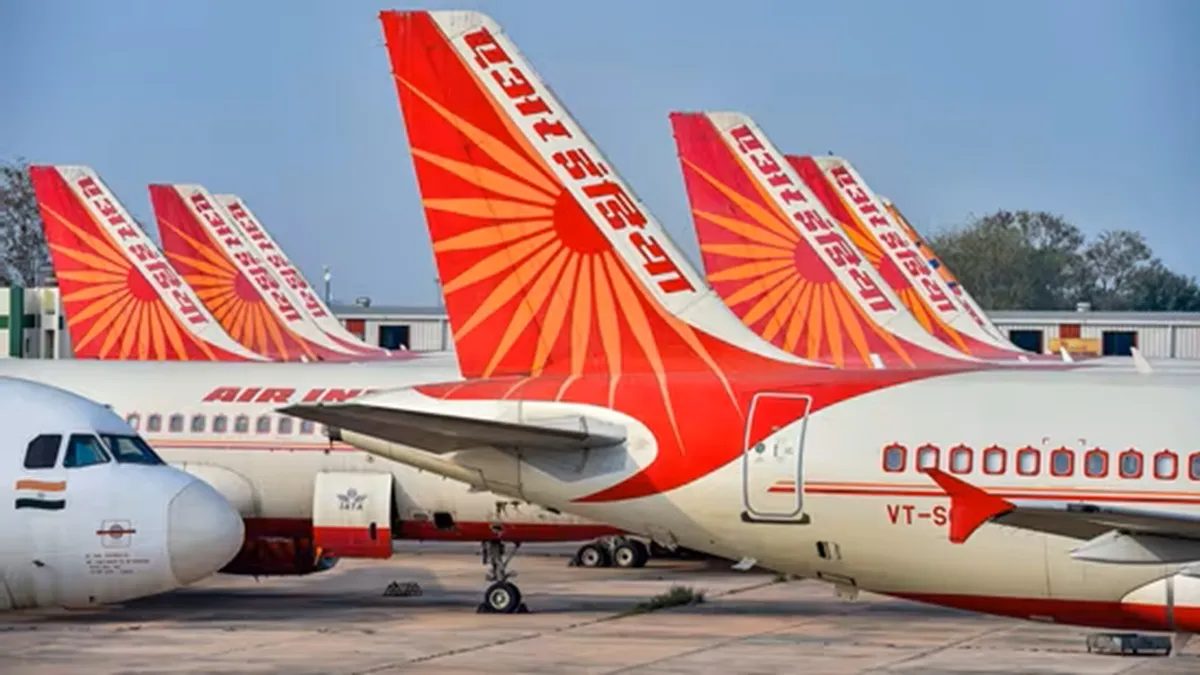
Several Indian airlines, including Air India, IndiGo, and SpiceJet, on Thursday issued travel advisories after Iran abruptly closed its airspace, disrupting multiple international flight routes. The sudden shutdown has led to delays, rerouting, and cancellations, particularly for long-haul flights that typically pass over Iranian territory.
The development comes amid intensifying protests in Iran against Supreme Leader Ayatollah Ali Khamenei and escalating tensions between Iran and the United States, raising serious aviation safety concerns in the region.
Air India warns of delays and cancellations
Air India was among the first carriers to alert passengers. In a post on X, the airline said flights that usually overfly Iran are now being rerouted to ensure passenger safety, which may result in longer flight times.
“Due to the emerging situation in Iran and the subsequent closure of its airspace, Air India flights are operating via alternative routes, which may lead to delays. Some flights where rerouting is not feasible are being cancelled,” the airline said.
Air India urged passengers to check flight status before heading to the airport, reiterating that the safety of passengers and crew remains its top priority.
IndiGo issues travel alert, offers rebooking and refunds
IndiGo also confirmed that several of its international services were impacted due to Iran’s “sudden airspace closure.”
“Our teams are working diligently to assess the situation and support affected customers by offering the best possible alternatives,” the airline said.
IndiGo added that impacted passengers would be provided options such as rebooking on alternate flights or refunds, depending on individual cases.
SpiceJet advises passengers to stay updated
SpiceJet released a similar advisory, informing travellers that some of its flights could be affected due to the closure.
“Passengers are advised to check their flight status on our website or contact our 24×7 reservation helpline for assistance,” the airline said in a statement on X.
Why Iran closed its airspace
Iran ordered the closure of its airspace to commercial aircraft early Thursday, according to a notice issued to pilots. While no official reason was provided, the restriction was initially expected to remain in effect until 7:30 am local time.
The move coincides with widespread domestic protests, heightened security measures, and growing fears of a possible US military response. Iran has previously shut its airspace during periods of conflict, including:
- The 12-day confrontation with Israel in June
- Exchanges of fire during the Israel–Hamas conflict
Airlines globally avoiding Iranian airspace
Aviation risk-monitoring platform SafeAirspace reported that most international airlines are now avoiding Iranian airspace altogether. Several carriers have already reduced or suspended services in the region.
Experts warn that airspace closures often signal potential military or security activity, including air defence operations or missile launches, which raise the risk of civilian aircraft being misidentified.
What passengers should do
- Check flight status directly with airlines before travel
- Expect longer travel times due to rerouting
- Be prepared for last-minute schedule changes or cancellations
- Opt for flexible rebooking or refunds if offered
As the situation in Iran remains volatile, airlines are expected to continue monitoring developments closely and adjust operations in line with safety advisories from international aviation authorities.
State & Regional
Uttarakhand Bus Tragedy: At Least 7 Feared Dead After Bus Plunges Into Gorge in Almora; Rescue Ops Underway
Dehradun:
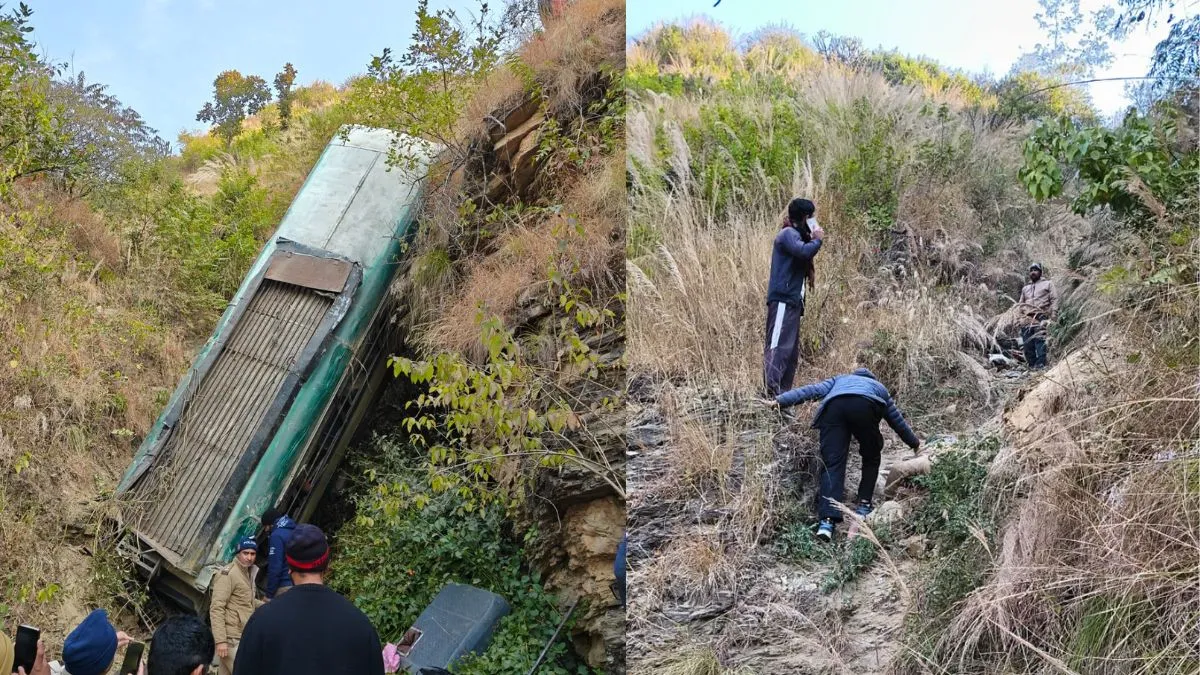
In a tragic road accident, a passenger bus plunged into a deep gorge near Bhikiyasain in Uttarakhand’s Almora district on Tuesday morning, leaving at least six to seven people feared dead, according to officials from the State Disaster Response Force (SDRF).
The accident occurred on the Bhikiyasain–Vinayak Motor Road, a hilly stretch known for sharp turns and narrow passages. The bus was reportedly en route from Bhikiyasain to Ramnagar when it skidded off the road and fell into the gorge under circumstances that are still being investigated.
Rescue operations underway
Soon after receiving the distress call, SDRF rescue teams were rushed to the accident site, along with local police and district administration officials. Due to the steep terrain and difficult access, rescue efforts have been challenging.
Several injured passengers were pulled out of the gorge and shifted to the Government Hospital in Bhikiyasain, while those with serious injuries were referred to higher medical centres for advanced treatment.
“Rescue teams have been dispatched to the spot. There are reports of some fatalities,” Almora SSP Devendra Pincha said, adding that relief and evacuation operations were ongoing.
Chief Minister Dhami expresses grief
Uttarakhand Chief Minister Pushkar Singh Dhami expressed deep sorrow over the incident and said he was personally monitoring the situation.
“We have received extremely distressing news of a bus accident on the Bhikiyasain–Vinayak Motor Road in Almora district. This incident is profoundly painful and heart-wrenching,” CM Dhami said in a post on X.
He added that the district administration has been directed to ensure immediate medical care for the injured, and all necessary assistance is being provided to affected families.
Union Minister Ajay Tamta reacts
Union Minister and Almora–Pithoragarh MP Ajay Tamta also expressed anguish over the tragedy. He said that police, SDRF and administrative teams were carrying out a coordinated rescue operation.
“The news of this horrific road accident is extremely heartbreaking. Several passengers are feared dead or injured after the bus plunged into a gorge,” Tamta posted, assuring that medical facilities were being extended without delay.
Hill road safety concerns resurface
The incident once again highlights ongoing safety concerns on Uttarakhand’s hilly roads, especially during winter months when low temperatures, fog and slippery surfaces increase accident risks. Authorities are expected to conduct a technical inspection of the vehicle and assess road conditions to determine the cause of the crash.
More details are awaited as rescue operations continue and officials work to confirm the exact number of casualties.


Why Traditional Indian Foods Are Making a Comeback for Gut Health

Gladiator II on OTT: Where to Stream the Epic Historical Drama Online

Michael Vaughan Calls South Africa national cricket team the ‘Stupidest Team’ After India national cricket team Wins ICC Men’s T20 World Cup 2026

Ex-Cricketer Shikhar Dhawan Buys Ultra-Luxury Apartment Worth ₹69 Crore in Gurugram

Delhi Police SI Neetu Bisht Caught Taking ₹20 Lakh Bribe – Shocking Details Emerge in Corruption Probe

Telegram Channels Disseminating Pro‑Russian Propaganda in Poland
-
 Celebrity Lifestyle10 months ago
Ex-Cricketer Shikhar Dhawan Buys Ultra-Luxury Apartment Worth ₹69 Crore in Gurugram
-
 Crime & Investigation8 months ago
Delhi Police SI Neetu Bisht Caught Taking ₹20 Lakh Bribe – Shocking Details Emerge in Corruption Probe
-
 Glamour & Entertainment9 months ago
Telegram Channels Disseminating Pro‑Russian Propaganda in Poland
-

 Bollywood7 months ago
No ₹3 Lakh Fine or 2-Year Jail: The Truth Behind the ‘Hakla’ GIF Buzz
-

 Entertainment9 months ago
Abhijeet & Dr Tarika Reunite in CID 2 — Fans Say ‘Clear the Misunderstanding Now
-

 Business9 months ago
Amazon sets 30‑day relocation deadline for corporate staff—opt out by resigning in 60 days
-

 Travel & Adventure9 months ago
Best Places to Hangout in Delhi (2025): Top 10 Picks for Fun & Chill
-

 Economy & Business9 months ago
📈 Indian Stock Market Soars in June 2025 Amid RBI Rate Cut and Foreign Investment Boost