
News
Two Killed, Five Injured After Mob Storms CRPF Camp in Manipur’s Bishnupur

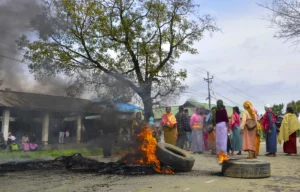
At least two people were killed and five others injured after security forces opened fire when a mob stormed a CRPF camp in Bishnupur, Manipur, on Tuesday. The incident occurred amid rising tensions following a deadly bomb attack earlier in the day.
According to Govindas Konthoujam, the situation escalated when protesters gathered in large numbers and attempted to enter the camp.
⚠️ What Triggered the Violence?
The unrest began after a tragic bomb attack in the Moirang Tronglaobi area during the early hours of Tuesday.
- A 5-year-old boy and a 6-month-old girl were killed
- Their mother sustained injuries
- The attack was allegedly carried out by suspected militants
The incident sparked widespread outrage, particularly among local residents, leading to protests.
🔥 Mob Storms CRPF Camp
Angered by the killings, a large group of protesters—reportedly including women and youths—marched towards a CRPF camp near Gelmol, located close to the attack site.
Despite appeals from authorities, the situation spiraled:
- Protesters stormed the CRPF camp
- Vehicles were set on fire
- Property inside the camp was vandalised
Security personnel eventually opened fire as the situation went out of control.
🔫 Firing Leaves Two Dead, Several Injured
As per officials:
- Security forces fired in self-defence or to control the mob
- Two people died in the firing
- Five others sustained bullet injuries
Authorities are yet to release detailed identities of the victims.
🌐 Internet Services Suspended in Multiple Districts
In response to the escalating law and order situation, the Manipur government imposed restrictions across several districts.
Internet and mobile data services have been suspended for three days in:
- Imphal West
- Imphal East
- Thoubal
- Kakching
- Bishnupur
The order, issued by Commissioner N Ashok Kumar, aims to:
- Prevent the spread of misinformation
- Curb rumours on social media
- Maintain public order
🚨 Rising Tensions in the Region
This incident highlights the fragile security situation in parts of Manipur, where:
- Militant activities continue to pose threats
- Civilian casualties often trigger public unrest
- Protests can quickly escalate into violence
Authorities have urged calm while security forces continue operations to identify those behind the initial bomb attack.
🏁 Final Take
The tragic sequence of events—from the bomb attack killing two children to the mob violence and firing at the CRPF camp—underscores the volatility of the situation in Bishnupur.
With curbs in place and investigations underway, the focus now remains on restoring peace and ensuring accountability for both the militant attack and the subsequent violence.

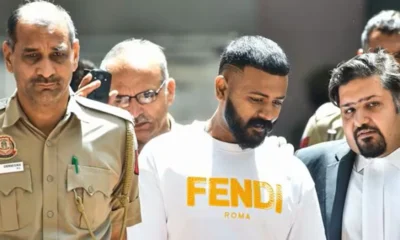








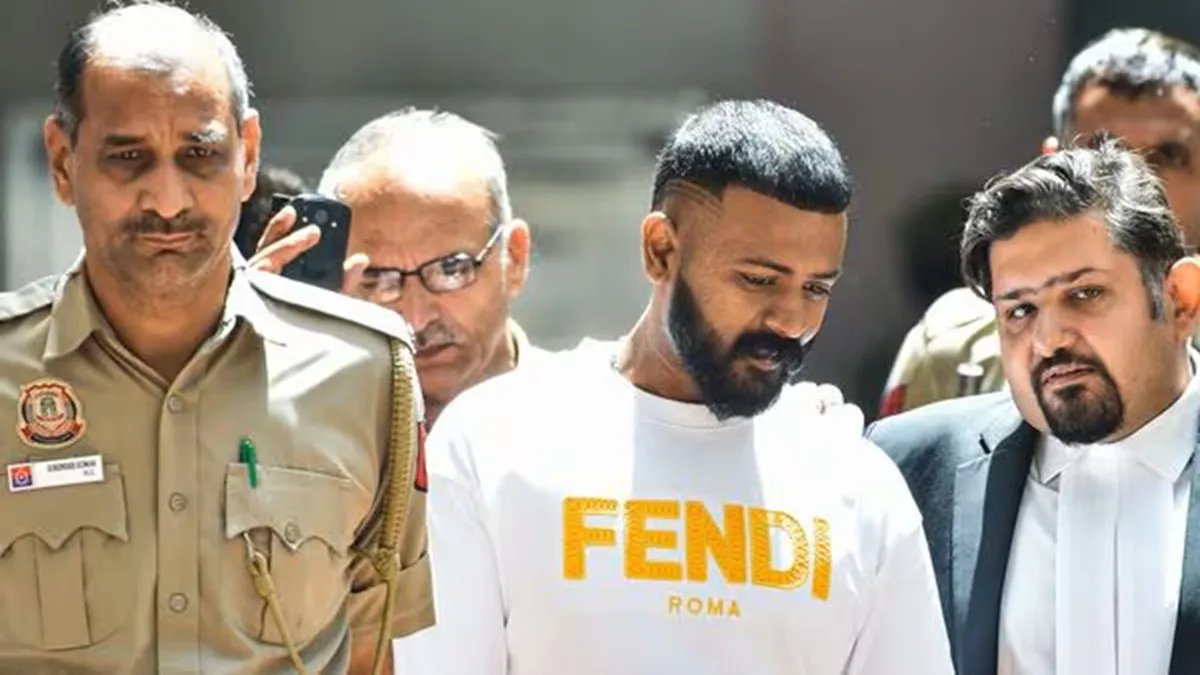
A Delhi court has granted bail to alleged conman Sukesh Chandrasekhar in a money laundering case linked to the controversial AIADMK “two leaves” election symbol dispute. The order was issued by the Rouse Avenue Court under provisions of the Prevention of Money Laundering Act (PMLA).
However, despite securing bail in this case, Chandrasekhar will not be released from jail, as multiple criminal cases against him are still pending.
⚖️ What Is the AIADMK ‘Two Leaves’ Symbol Case?
The case is part of a larger investigation into alleged attempts to influence the allocation of the Election Commission of India over the iconic “two leaves” symbol of the All India Anna Dravida Munnetra Kazhagam (AIADMK).
According to investigators:
- Chandrasekhar allegedly acted as a middleman
- He was linked to AIADMK leader T T V Dhinakaran
- The alleged goal was to secure the party symbol for the faction led by V K Sasikala
Authorities claim that around ₹1.3 crore in cash was recovered, which was allegedly meant to bribe an Election Commission official.
🚨 Bail Granted, But No Immediate Release
While bail has been granted in this particular PMLA case, it does not mean Chandrasekhar will walk free.
- He is facing 31 criminal cases across India
- Bail has been granted in 26 cases
- 5 cases are still pending, keeping him in custody
This highlights the complex legal challenges surrounding the accused.
👤 Who Is Sukesh Chandrasekhar?
Sukesh Chandrasekhar is widely known for his involvement in high-profile fraud and extortion cases.
📍 Early Life & Background
- Born in Bengaluru
- Studied at Bishop Cotton Boys’ School
- Graduated from Madurai University
⚠️ Criminal History
His alleged criminal activities began at a young age:
- First arrested at 17 years old
- Accused of cheating a family acquaintance of ₹1.5 crore
Over the years, he has been linked to multiple financial fraud cases, often involving impersonation and high-level connections.
🎬 Links to High-Profile Circles
Chandrasekhar has frequently made headlines due to his connections with celebrities and socialites. His wife, actress Leena Maria Paul, has also been named in several cases alongside him.
His alleged activities and associations have kept him in the spotlight, especially in cases involving financial scams and extortion networks.
🏁 Final Take
The bail granted to Sukesh Chandrasekhar in the AIADMK symbol scam case marks another development in a long-running legal saga. However, with multiple cases still pending, his legal troubles are far from over.
The case continues to shed light on alleged attempts to influence electoral processes and financial misconduct, making it a significant matter in India’s legal and political landscape.
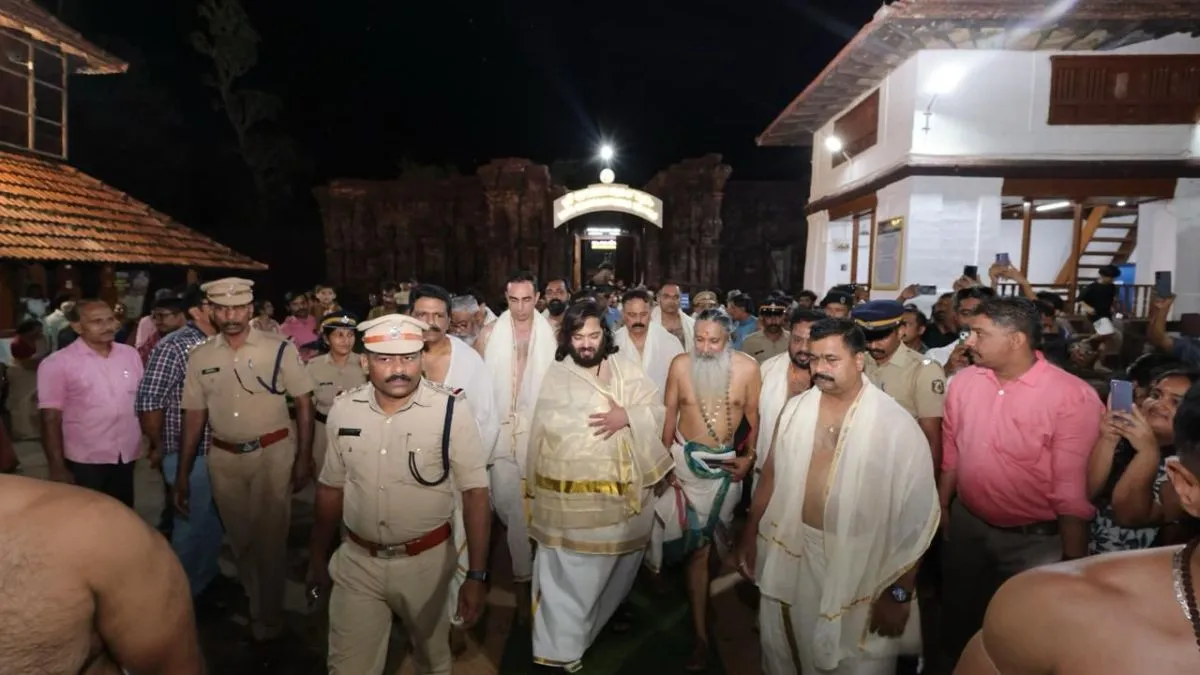
Anant Ambani, Executive Director of Reliance Industries Limited, has announced a major philanthropic initiative during his visit to prominent temples in Kerala, pledging a total of ₹18 crore for temple development and animal welfare.
🛕 Major Donations to Temples
During his visit, Ambani contributed:
- ₹3 crore to Rajrajeshwaram Temple
- ₹3 crore to Guruvayur Temple
These donations are aimed at supporting temple operations, infrastructure, and services for devotees.
🏗️ ₹12 Crore Renovation Plan for Rajrajeshwaram Temple
A significant portion of the pledge—₹12 crore—is allocated for the renovation of the historic Rajrajeshwaram Temple.
Key highlights of the renovation:
- Restoration of the East Gopuram, which has been in poor condition for over 200 years
- Preservation of the temple’s cultural and historical heritage
- Improved facilities for devotees, including:
- Better infrastructure
- Enhanced parking arrangements
During the visit, Ambani also performed traditional rituals and formally handed over the donation cheque to temple authorities.
🐘 Focus on Elephant Welfare
Beyond temple contributions, Ambani emphasized the importance of improving the lives of temple elephants through his wildlife initiative linked to Vantara.
Proposed initiatives include:
- Establishment of a modern elephant hospital
- Development of chain-free shelters
- Upgrading living conditions using scientific and humane care practices
This reflects a growing awareness around ethical treatment of animals involved in traditional and religious practices.
🗣️ Ambani’s Vision
Speaking during the visit, Ambani highlighted the broader role of temples in Indian society:
“Temples are not merely places of worship—they are living institutions that nurture faith, community, compassion, and our deep connection with nature.”
He stressed that such initiatives aim to:
- Preserve India’s spiritual heritage
- Enhance the devotee experience
- Ensure dignity and compassionate care for animals
📌 Why This Matters
This initiative stands out because it combines:
- Religious and cultural preservation
- Infrastructure development
- Animal welfare reform
It reflects a more holistic approach to philanthropy—balancing tradition with modern ethical standards.

Background: Trigger for Operation Sindoor
In the aftermath of the Pahalgam terrorist attack, India launched Operation Sindoor, a coordinated military response involving all three branches of the armed forces. The objective was to deliver a strong deterrent message and neutralize emerging threats from across the border.
Within this framework, the Indian Navy played a decisive strategic role, leveraging its capabilities across air, surface, and subsurface domains to apply sustained pressure on Pakistan’s military posture.
Tri-Domain Naval Dominance
The Indian Navy executed a comprehensive maritime strategy, effectively creating a layered blockade:
- Air Domain:
Surveillance and strike coordination were supported by Indian Air Force assets and P-8I maritime patrol aircraft, enabling real-time intelligence and continuous monitoring of adversary movements. - Surface Domain:
Warships, destroyers, and frigates established control over critical sea lanes, ensuring dominance in the Arabian Sea and restricting hostile naval mobility. - Subsurface Domain:
The covert deployment of four submarines created an invisible yet potent deterrent. Their presence significantly complicated enemy planning and heightened strategic uncertainty.
Surface Action Groups & Carrier Battle Group
The Navy’s Surface Action Groups (SAGs) and Carrier Battle Group (CBG) formed the backbone of the operation:
- Rapid forward deployment ensured immediate maritime superiority
- Integration of destroyers, frigates, and onboard helicopters enabled multi-role combat readiness
- MARCOS (Marine Commandos) were deployed for high-risk special operations, including precision strikes on key targets
This aggressive posture forced the adversary into a defensive stance, limiting their operational flexibility.
Western Fleet: Rapid Combat Readiness
Under the leadership of Vice Admiral Rahul Vilas Gokhale, the Western Fleet demonstrated exceptional preparedness:
- Achieved full operational readiness within 96 hours
- Conducted live missile firing exercises
- Activated complete weapons inventory, including:
- Missiles
- Torpedoes
- Naval artillery
The fleet’s positioning in the Arabian Sea ensured effective maritime control, deterring hostile actions and safeguarding strategic interests.
Strategic Impact
The Navy’s forward deployment achieved several key outcomes:
- Established maritime dominance in the region
- Disrupted and restricted enemy naval operations
- Enhanced joint-force synergy with the Army and Air Force
- Reinforced India’s deterrence posture
Leadership and Valor
Operation Sindoor also highlighted the courage and professionalism of Indian Navy personnel:
- Captain Suraj James Rivera led a Surface Action Group through a high-threat, four-day mission, maintaining full strike readiness.
- Captain Vikas Garg commanded a frontline frigate, balancing aerial and coastal threats effectively.
- Captain Pyas Kuttiyar conducted covert submarine operations in heavily monitored zones, gathering critical intelligence.
- Commander Rajeshwar Kumar Sharma ensured strong deterrence during forward deployment.
- Commander Vivek Kuriako and Commander Kapil Kumar executed high-risk submarine missions under constant surveillance.
- Commander Saurabh Kumar safeguarded aircraft and crew during ISR missions under adverse weather and GPS-denied conditions.
- Lieutenant Commander Rishabh Purviya led a successful counter-terror strike and ensured safe extraction under heavy fire.
Conclusion
Operation Sindoor demonstrated the Indian Navy’s ability to conduct high-intensity, multi-domain operations with speed and precision. Its coordinated deployment across air, surface, and subsurface layers not only strengthened India’s military response but also reinforced its position as a formidable maritime power in the region.


Zareen Khan’s Mother Parveen Khan Passes Away After Prolonged Illness in Mumbai

Prabhas Reviews Biker: ‘Enjoyed It from Start to End’

Sunil Gavaskar Slams Overseas Players Over IPL 2026 Availability, Questions Commitment

Ex-Cricketer Shikhar Dhawan Buys Ultra-Luxury Apartment Worth ₹69 Crore in Gurugram

Delhi Police SI Neetu Bisht Caught Taking ₹20 Lakh Bribe – Shocking Details Emerge in Corruption Probe

Telegram Channels Disseminating Pro‑Russian Propaganda in Poland
-
 Celebrity Lifestyle11 months ago
Ex-Cricketer Shikhar Dhawan Buys Ultra-Luxury Apartment Worth ₹69 Crore in Gurugram
-
 Crime & Investigation8 months ago
Delhi Police SI Neetu Bisht Caught Taking ₹20 Lakh Bribe – Shocking Details Emerge in Corruption Probe
-
 Glamour & Entertainment10 months ago
Telegram Channels Disseminating Pro‑Russian Propaganda in Poland
-

 Bollywood8 months ago
No ₹3 Lakh Fine or 2-Year Jail: The Truth Behind the ‘Hakla’ GIF Buzz
-

 Entertainment10 months ago
Abhijeet & Dr Tarika Reunite in CID 2 — Fans Say ‘Clear the Misunderstanding Now
-

 Business10 months ago
Amazon sets 30‑day relocation deadline for corporate staff—opt out by resigning in 60 days
-

 Travel & Adventure10 months ago
Best Places to Hangout in Delhi (2025): Top 10 Picks for Fun & Chill
-

 Economy & Business10 months ago
📈 Indian Stock Market Soars in June 2025 Amid RBI Rate Cut and Foreign Investment Boost