
News
🇮🇳 Indian Army Successfully Tests Akash Prime Air‑Defence System at 15,000 ft in Ladakh


- /home/u299404478/domains/toplisted.in/public_html/wp-content/plugins/mvp-social-buttons/mvp-social-buttons.php on line 27
https://toplisted.in/wp-content/uploads/2025/07/Toplisted-Image-size-86.png&description=🇮🇳 Indian Army Successfully Tests Akash Prime Air‑Defence System at 15,000 ft in Ladakh', 'pinterestShare', 'width=750,height=350'); return false;" title="Pin This Post">
- Share
- Tweet /home/u299404478/domains/toplisted.in/public_html/wp-content/plugins/mvp-social-buttons/mvp-social-buttons.php on line 72
https://toplisted.in/wp-content/uploads/2025/07/Toplisted-Image-size-86.png&description=🇮🇳 Indian Army Successfully Tests Akash Prime Air‑Defence System at 15,000 ft in Ladakh', 'pinterestShare', 'width=750,height=350'); return false;" title="Pin This Post">
Mission Objective & Context
In a significant leap for India’s indigenous air-defence capability, the Army Air Defence Corps, supported by senior DRDO scientists and industry partners BEL and BDL, conducted the Akash Prime trials in the harsh, high-altitude conditions of Eastern Ladakh
These trials marked the first high-altitude production-model firing, demonstrating technology meant to shield sensitive border regions against fast-moving aerial threats .

Achieving Direct Hits at the “Roof of the World”
During the mission on July 16, two high-speed unmanned aerial targets—Shikra drones simulating cruise missiles or reconnaissance threats—were successfully intercepted and destroyed at over 15,000 feet
Official Defence Ministry statements confirmed:
India, on July 16 achieved a significant milestone by successfully destroying two aerial high-speed unmanned targets at high-altitude in Ladakh by Akash Prime…

What Makes Akash Prime Special
Altitude-Ready Design
- Engineered for operations above 4,500 m in thin, cold air
- Ground support and radar systems optimized to function reliably under harsh conditions.
Advanced Seeker & Precision Guidance
- Equipped with a newly developed active Radio‑Frequency seeker, enhancing terminal accuracy and resilience to jamming
- Hybrid guidance: full-range command guidance + fire‑and‑forget terminal lock → single-shot kill probability > 90%
Evolution from Mk‑I to Prime
- Built on the proven Akash Mark‑I/1S framework.
- Improvements include enhanced seeker robustness, ramjet propulsion, and standalone software/hardware enhancements

Strategic Value & Deployment Plans
- This test is a key milestone ahead of induction into the 3rd and 4th Army Akash regiments, designated to secure India’s high-altitude frontier
- The RTM includes:
- Each regiment fields 96 missiles with eight launchers.
- A Dot-matrix layered defence covering from drone threats to fighter jets under the IACCS umbrella
Built on Lessons from Operation Sindoor
Akash Prime’s design enhancements are informed by real-time feedback from Operation Sindoor, where the earlier Akash systems performed decisively—intercepting hostile aircraft and drones along the Pakistan border

Strategic & Diplomatic Implications
- Firmly aligns with the Atmanirbhar Bharat initiative—India’s push for self-reliant defence manufacturing
- Enhances deterrence posture along the China border, particularly in disputed Ladakh regions
- Export potential rising: emerging international interest, e.g., potential Brazilian evaluation .
Voices from the Ground
- Raksha Mantri Rajnath Singh praised the achievement: “…a significant boost to India’s Air Defence capabilities, particularly for meeting high-altitude operational requirements.”
- Dr. Samir V. Kamat, DRDO Secretary: “The missile has met the country’s critical air defence requirements for high‑altitude.”
Looking Ahead
- Akash‑NG, the next-gen version featuring solid dual-pulse motors and AESA radar, is already underway
- Export discussions may intensify as the Prime’s proven performance in real-world terrain fuels global interest.


News
Kerala CM Race Intensifies: Posters in Wayanad Target Rahul Gandhi and Priyanka Gandhi Vadra Amid KC Venugopal Speculation
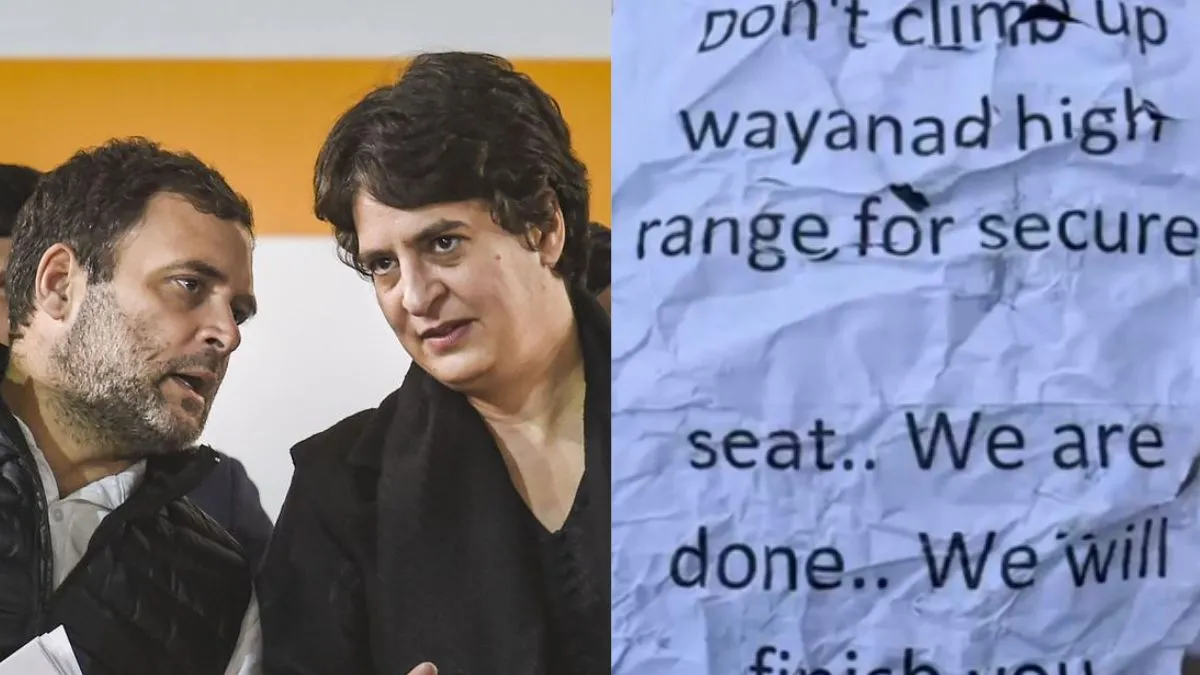
Political tensions within the Indian National Congress in Kerala have escalated following the appearance of controversial posters in Wayanad targeting Rahul Gandhi and Priyanka Gandhi Vadra amid the ongoing uncertainty over the state’s next Chief Minister.
The posters surfaced near the Wayanad District Congress Committee office and reportedly warned the party’s central leadership against appointing senior Congress leader K. C. Venugopal as Kerala’s next Chief Minister.
Posters Warn Congress High Command
Several posters carried sharp political messages aimed directly at the Gandhi siblings.
One of the most striking slogans reportedly stated:
The statement appeared to suggest that local party workers and voters could turn against the Congress leadership if public sentiment in Kerala is ignored during the Chief Minister selection process.
Other posters allegedly urged Rahul Gandhi and Priyanka Gandhi to “forget Wayanad” if decisions were imposed from Delhi without considering grassroots opinion.
The messaging reflected growing unease among sections of the Kerala Congress unit regarding the possible elevation of KC Venugopal.
Why KC Venugopal’s Name Is Causing Friction
KC Venugopal is considered one of the closest aides to the Congress high command and currently plays a major organisational role at the national level.
However, critics within the Kerala unit reportedly believe:
- The decision-making process is becoming too centralised
- Local leaders and workers are being sidelined
- Delhi-based influence is outweighing state-level political realities
The posters also accused the leadership of favouring loyalty to the central command over regional leadership dynamics.
So far, neither Rahul Gandhi nor Priyanka Gandhi Vadra has publicly reacted to the controversy.
Congress Returns to Power in Kerala After a Decade
The leadership tussle comes at a sensitive time for the Congress.
The Congress-led United Democratic Front (UDF) recently secured a major victory in the 2026 Kerala Assembly elections:
- UDF won 102 out of 140 seats
- The ruling Left Democratic Front (LDF) was reduced to 35 seats
The result marked the Congress alliance’s return to power in Kerala after nearly ten years.
Despite the electoral success, internal competition over the Chief Minister’s position has now exposed factional divisions.
Main Contenders for Kerala Chief Minister
At present, three senior leaders are being viewed as the leading contenders:
- K. C. Venugopal
- V. D. Satheesan
- Ramesh Chennithala
Each leader is believed to enjoy support from different factions within the state Congress.
Political observers say the final decision could significantly impact the party’s unity and long-term stability in Kerala.
Rahul Gandhi Holds Consultations in Delhi
Amid growing pressure, Rahul Gandhi reportedly held meetings in New Delhi with former Kerala Pradesh Congress Committee (KPCC) presidents and senior party leaders.
According to sources:
- Leaders shared feedback on public mood and party sentiment
- Discussions focused heavily on the Chief Minister selection process
- Concerns about internal unity were also raised
Former KPCC chief K. Muraleedharan indicated that the final announcement could come soon.
Senior Congress leader V. M. Sudheeran also stated that he had conveyed grassroots sentiment to the party leadership.
High Command Continues Deliberations
Congress observers Ajay Maken and Mukul Wasnik have already met newly elected MLAs and consulted multiple factions within the state unit.
The leadership has also reportedly held discussions with:
- All three CM contenders
- Kerala Congress president Sunny Joseph
Sources suggest the Congress high command may announce Kerala’s next Chief Minister within the next 24–48 hours.
Final Take
While the Congress has achieved a significant electoral comeback in Kerala, the unresolved Chief Ministerial question has triggered visible internal tensions. The emergence of public posters targeting senior national leaders highlights the delicate balancing act facing the party high command.
The final leadership decision will not only determine Kerala’s next Chief Minister but could also shape the Congress party’s internal dynamics ahead of future national political battles.
Entertainment
Karuppu Gets Early Morning Show Boost as Tamil Nadu CM Vijay Approves Special Screenings


The makers of upcoming Tamil film Karuppu have expressed gratitude to Joseph Vijay after receiving permission to hold special 9 AM screenings ahead of the film’s theatrical release on May 14.
Starring Suriya and Trisha Krishnan in lead roles, the film has already generated strong excitement among fans on social media and within Tamil cinema circles.
Special 9 AM Shows Approved
The production banner behind Karuppu shared an official note on X (formerly Twitter), thanking the Tamil Nadu Chief Minister for allowing special first-day-first-show screenings.
The post reportedly read:
The makers also confirmed that:
- First-day-first-show screenings will begin at 9 AM on May 14
- The film’s music has been composed by Sai Abhyankkar
Special early morning screenings are considered significant in Tamil cinema, especially for highly anticipated releases featuring major stars.
Strong Buzz Around Suriya and Trisha’s Film
Karuppu has been attracting considerable online attention due to:
- The popular pairing of Suriya and Trisha
- Promotional materials and teasers
- Growing fan anticipation ahead of release
The film is written and directed by RJB.
Apart from the lead cast, the movie also features:
- Indrans
- Swasika
- Sshivada
- Supreeth Reddy
in important supporting roles.
Vijay’s Political Journey Continues to Draw Film Industry Attention
Since taking oath as Tamil Nadu Chief Minister on May 10, Joseph Vijay has continued to receive congratulatory messages from film personalities and fans alike.
Earlier, Suriya had publicly congratulated Vijay, calling the political milestone a “new chapter” in Tamil Nadu politics.
The growing crossover between Tamil cinema and politics remains a major talking point across the entertainment industry.
Trisha Krishnan’s Emotional Moment Goes Viral
Trisha Krishnan also attended Vijay’s swearing-in ceremony, where several clips featuring her quickly went viral online.
In widely shared videos:
- Trisha appeared emotional during Vijay’s speech
- She warmly greeted Vijay’s mother, Shoba Chandrasekhar
- Fans praised the emotional and heartfelt moments from the ceremony
Later, Trisha posted a brief emotional message online:
Karuppu Release Date
Karuppu is scheduled for a worldwide theatrical release on May 14, 2026.
With:
- Special morning shows
- Strong fan anticipation
- A star-studded cast
- Political and social media buzz
the film is expected to open strongly at the box office.
Final Takeaway
The approval of special morning screenings has added further momentum to the release of Karuppu. Backed by a popular cast and growing public interest, the film is shaping up to be one of the most talked-about Tamil releases of the season.

In a major breakthrough amid ongoing concerns over examination fraud, Bihar Police has uncovered an alleged NEET “solver gang” in Nalanda district ahead of the now-cancelled NEET-UG 2026 examination.
Three individuals, including a second-year MBBS student, were detained after police recovered cash, suspected forged admit cards, and digital evidence linked to exam malpractice during a vehicle checking operation in Rajgir.
High Alert Ahead of NEET Led to Operation
According to Sunil Kumar Singh, authorities had intensified surveillance across the district because of the scheduled NEET examination on May 3.
During routine vehicle inspections:
- Police identified two suspicious vehicles
- Occupants were questioned
- One of the suspects revealed he was pursuing MBBS
The vehicles were later taken to the police station for detailed investigation.
₹2 Lakh Cash Recovered
Police officials stated that bundles of currency notes were found inside one of the vehicles.
During questioning:
- The accused reportedly claimed the cash amounted to nearly ₹2 lakh
- Officers became suspicious due to the absence of a satisfactory explanation regarding the money and movement of the group
The recovery strengthened suspicions of organised examination-related fraud activities.
Digital Evidence & Forged Admit Cards Found
A forensic examination of the accused persons’ mobile phones reportedly revealed:
- Multiple admit cards linked to various examinations
- Suspected forged documents
- Financial transaction details
- Communication records connected to the alleged racket
Investigators believe the gang may have been involved in facilitating impersonation and organised cheating during competitive examinations.
What Is a ‘Solver Gang’?
A “solver gang” is a term commonly used for organised networks involved in exam fraud. These groups may:
- Arrange impersonators to write exams
- Forge admit cards or ID documents
- Leak question papers or answers
- Take money from candidates seeking unfair advantage
Such gangs have surfaced in several high-profile entrance exam controversies across India over the years.
NEET Under Increasing Scrutiny
The Nalanda arrests come at a time when NEET-UG 2026 is already facing scrutiny due to alleged paper leak cases and irregularities reported from multiple states, including Rajasthan.
The latest incident has reignited debate over:
- Security of national-level examinations
- Digital fraud in education systems
- Need for stricter verification and surveillance mechanisms
Investigation Expands
Police are now:
- Tracking possible interstate links
- Examining financial trails
- Identifying other suspects connected to the network
Authorities have indicated that more arrests may follow as the investigation progresses.
Why This Case Matters
NEET is among India’s most competitive entrance examinations, with lakhs of students competing annually for medical seats. Cases involving cheating and impersonation directly impact:
- Merit-based admissions
- Fair competition
- Trust in the examination system
The Nalanda case highlights how organised exam fraud networks continue to evolve despite tighter security measures.
Final Takeaway
The busting of the alleged solver gang in Nalanda marks another major development in the ongoing crackdown against exam malpractice in India. As investigations continue, authorities are expected to intensify monitoring and strengthen anti-cheating mechanisms to safeguard the credibility of national examinations.


⚽ Kolkata Derby Could Decide ISL 2026 Title Race as Five Clubs Wait on Crucial Weekend

Kerala CM Race Intensifies: Posters in Wayanad Target Rahul Gandhi and Priyanka Gandhi Vadra Amid KC Venugopal Speculation

‘Last Plate Syndrome’: Why Many Mothers Eat Last and How It Quietly Affects Their Health

Delhi Police SI Neetu Bisht Caught Taking ₹20 Lakh Bribe – Shocking Details Emerge in Corruption Probe

Ex-Cricketer Shikhar Dhawan Buys Ultra-Luxury Apartment Worth ₹69 Crore in Gurugram

Telegram Channels Disseminating Pro‑Russian Propaganda in Poland
-
 Crime & Investigation1 year ago
Delhi Police SI Neetu Bisht Caught Taking ₹20 Lakh Bribe – Shocking Details Emerge in Corruption Probe
-
 Celebrity Lifestyle1 year ago
Ex-Cricketer Shikhar Dhawan Buys Ultra-Luxury Apartment Worth ₹69 Crore in Gurugram
-
 Glamour & Entertainment1 year ago
Telegram Channels Disseminating Pro‑Russian Propaganda in Poland
-

 Bollywood1 year ago
No ₹3 Lakh Fine or 2-Year Jail: The Truth Behind the ‘Hakla’ GIF Buzz
-

 Travel & Adventure1 year ago
Best Places to Hangout in Delhi (2025): Top 10 Picks for Fun & Chill
-

 Beauty1 year ago
Top 10 Skincare Brands in India Loved by Dermatologists (2025 Update)
-

 Business1 year ago
Amazon sets 30‑day relocation deadline for corporate staff—opt out by resigning in 60 days
-

 Entertainment1 year ago
Abhijeet & Dr Tarika Reunite in CID 2 — Fans Say ‘Clear the Misunderstanding Now